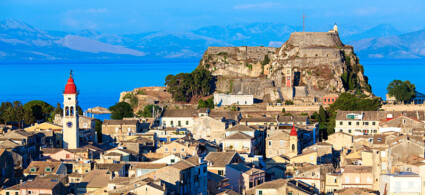
Corfu Town
The enchanting city of Corfu or Kerkyra is a maze of cobbled alleyways, picturesque squares and traditional cafés. The old quarter is not to be missed!
Read more
Corfu, the island that welcomed Odysseus before his long-awaited return to beloved Ithaca, is a captivating destination that has enchanted nobility and literary figures for centuries, including the romantic Empress Sissi and Lord Byron.
Beyond its stunning beaches bathed in crystal-clear waters, the list of things to see in Corfu includes fascinating cultural attractions such as museums and historic palaces, traditional villages that have retained their authentic character, fashionable beach resorts, a striking promontory where you can capture breathtaking photographs, and much more.
Don’t waste time hunting for the 10 must-see attractions in Corfu – we’ve done it for you!
Nestled between two hills crowned with two impressive fortresses, elegant Corfu’s capital is a charming tapestry of cobbled alleyways and sweeping vistas, concealing Venetian and Byzantine architectural treasures within its winding streets.
Corfu’s modern soul, with its fashionable restaurants and chic boutiques, coexists harmoniously with its ancient heritage, best experienced by strolling through the historic quarter and exploring the town’s cultural attractions.
Must-sees in Corfu Town include:
After exploring the capital, take time to visit the traditional villages where you can experience the most authentic side of Corfu.
The charming seaside village of Sidari is particularly popular with couples. Legend has it that if you swim through the nearby Canal d’Amour together, you’ll soon be married.
For a fascinating journey through time, visit Palia Perithia, the island’s oldest and once-wealthiest village. Nestled at the foot of Mount Pantokrator, this characterful settlement seems frozen in time.
Other delightful villages worth exploring include Agios Stefanos, Kassiopi, Afionas, Lefkimmi, Pelakas, Drimi and Doukades.
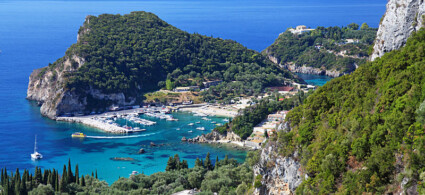
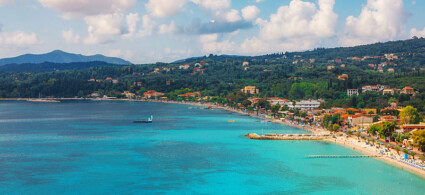
Paleokastritsa, widely regarded as the island’s most beautiful beach, is actually a vast coastal area comprising five bays and six sandy coves.
The largest beach is well-equipped and family-friendly, whilst the rocky shores are perfect for snorkelling and diving enthusiasts.
You can easily hop between beaches courtesy of the local water taxi service.
Myrtiotissa is an enchanting wild sandy beach, surrounded by towering cliffs draped in lush vegetation and lapped by crystalline waters.
Despite being one of the island’s most popular beaches, it retains its natural charm. There are no facilities, and it’s reached by walking a short trail from the bus stop.
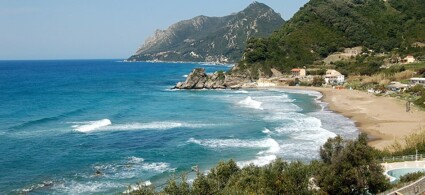
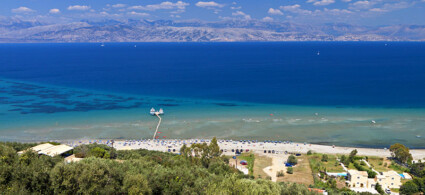
Cradled in a magnificent horseshoe bay, Agios Giorgios Pagi is a golden-sand beach stretching 5 km, kissed by emerald-green waters.
Part of this beach’s charm lies in the absence of sprawling resort developments – instead, you’ll find only intimate, characterful hotels.
Be careful not to confuse Agios Giorgios Pagi, located along the north coast, with Agios Giorgios in the island’s south.
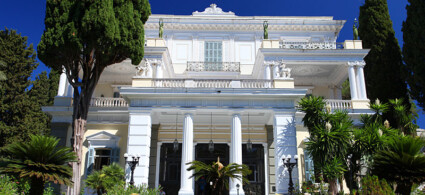
The Achillion, or Palace of Achilles, might better be called the Palace of Sissi, given its fame is inseparably linked to the romantic Austrian Empress who retreated here for her summer holidays.
Built in 1890, the palace is a triumph of neoclassical architecture, sumptuous furnishings and sculptures. Spend time wandering the elegant gardens and climb onto the marble balcony to admire a fresco depicting Achilles, the hero to whom Sissi dedicated the villa.
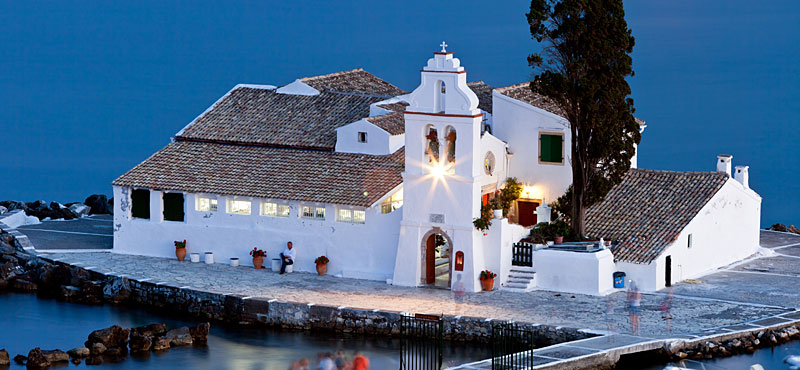
On the southern tip of the Kanoni peninsula stands the Vlacherna Monastery, an iconic symbol of Corfu and one of its premier attractions.
Built in the 17th century, this picturesque white chapel sits on the water, connected to the mainland by a narrow causeway where fishermen’s boats are moored.
It’s an exceptionally atmospheric spot, its beauty further enhanced by the soft hues of the sunset sky.
From the small harbour, you can boat out to the nearby uninhabited islet of Pontikonissi, where you’ll find another church, this one dating back to the 14th century.
If you’re keen to blend beach relaxation with cultural pursuits during your holiday, Corfu is an ideal destination.
The island boasts an impressive cultural offering, with plenty of museums dedicated to history and culture to explore – including some you might not expect to find on a Greek island!
Here are the most important:
One of Corfu’s natural wonders is Cape Drastis, a cove bordered by towering cliffs of clay-coloured rock that recall the famous White Cliffs of Dover in England.
This striking panorama captivated the poet Lord Byron – let its breathtaking views steal your heart too.
For just a couple of euros, you can hop on a boat to the tiny island of Vidos, just 1.2 km from Kerkyra harbour.
Rarely crowded, even in August, it’s a haven of tranquillity featuring a lovely green-shaded walking trail, two pretty beaches and a couple of hidden coves.
History buffs should visit the Serbian soldiers’ monument commemorating the soldiers who died here from disease and mistreatment during the First World War.
 Hotel
Hotel  Budget accommodations
  Apartments
  Family Hotel
  Luxury Hotel
  Resorts